Today’s prompt word, “Treasure” was on my mind bright and early on the country road.
The humidity hanging on a couple more days made my windshield foggy and the road ahead a misty haze.
I switch from dim to bright, to see clearly up close or farther ahead but blurry, I kept trying to decide.
A little or closer to seeing all.
I notice few other morning travelers. I drive slowly, no obnoxious impatient people behind me. No approaching lights undimmed on one of the many curves.
I can’t decide if I’m old or more careful, more slow or more cognizant of what I’ve committed to, what’s required of me.
I chose music over words and a Pandora station different than other mornings.
A song I’d never heard nor the artist led my morning on. Simple words.
A treasure, the refrain.
“I don’t have much to give. But, I give you my beating heart.”
A song about what matters to God, how so very little is so very much.
I won’t despise the day of small things. (Zechariah 4:10)
I thought of a surprising conversation yesterday. I’d asked an agent in a zoom call whether self-publishing a children’s book gives credibility to an author seeking to publish adult nonfiction traditionally.
There was no “Oh, tell me about your book” or an approving nod that says you’re on the right track.
No, neither of those, none of that.
Only, “only mention your book if your sales have been 5000 books.”
Oh.
Well, good to know, I suppose.
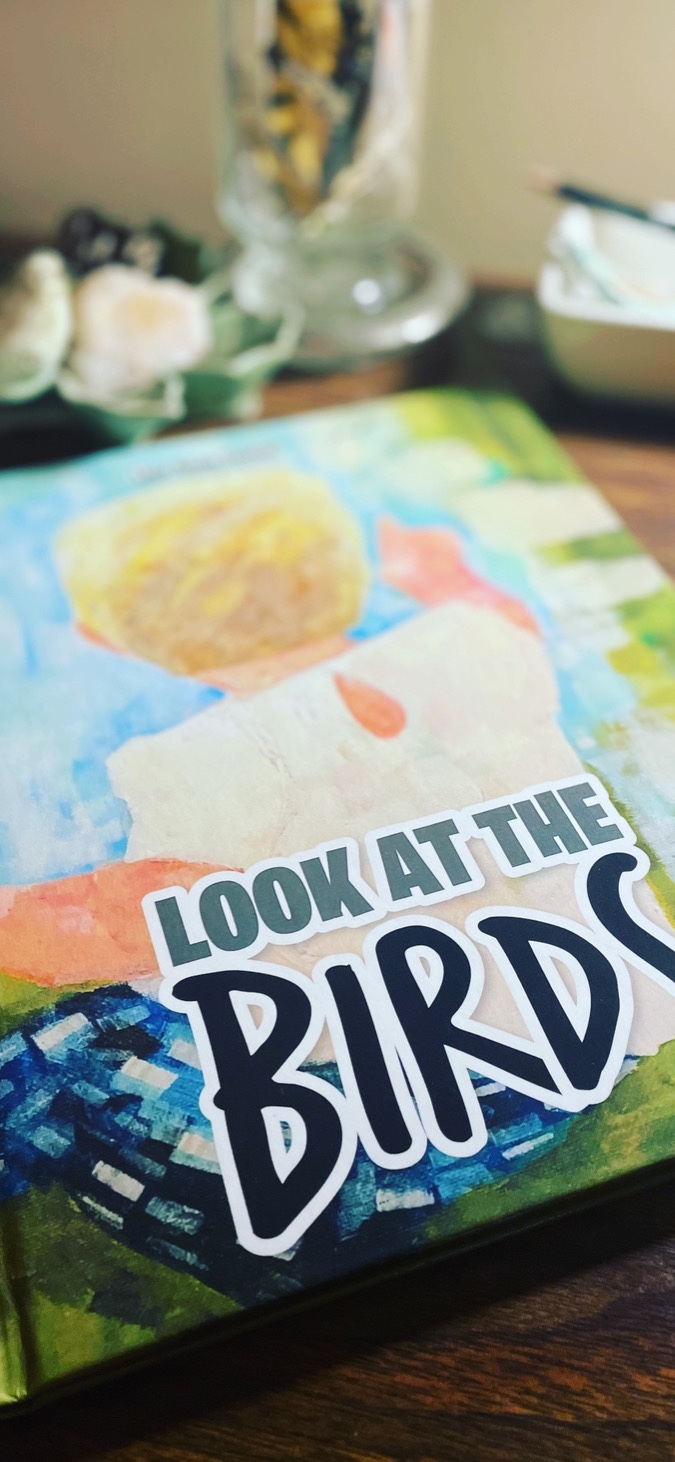
I love “Look at the Birds”, every single word, every color on the pages, every thought that clicked to birth the story and illustrations.
I felt a mixture of naivety and betrayal. Familiar thoughts.
This is when I remember my husband says I’m prone to believing life is a fairy tale.
Maybe or maybe just hopeful.
My heart beat a little faster yesterday when I saw a friend had my book on her coffee table. My soul welled up this morning when my granddaughter said “my Jesus, your Jesus too.”
Like the foggy barely lit road of morning, we see just enough to know the smallest treasured thing is the thing that brings the flutter of a heart well known, well loved and treasured.
Follow your heart for direction more than your misguided ideas of being known, seen or valuable.
“For your heart will always pursue what you esteem as your treasure.” Matthew 6:21 TPT
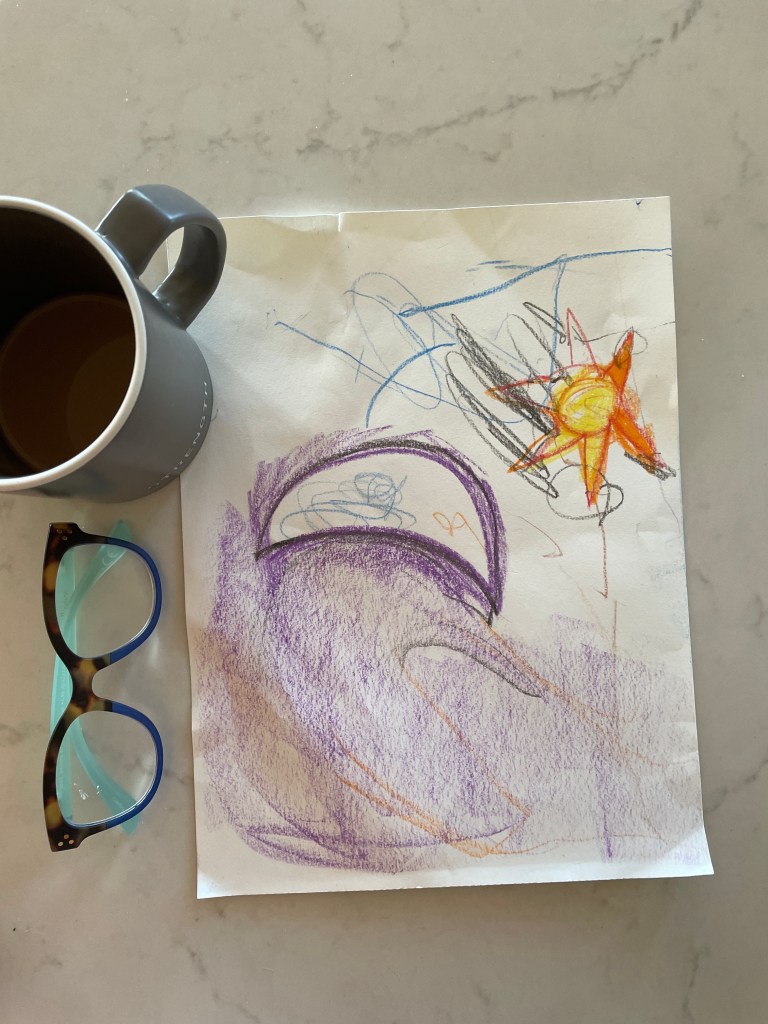
Know what matters. Songs in the early private morning, a crayon in the hand of a child, a conversation with a friend who sat close by, listened and understood.
“And though the Lord give you the bread of adversity and the water of affliction, yet your Teacher will not hide himself anymore, but your eyes shall see your Teacher. And your ears shall hear a word behind you, saying, “This is the way, walk in it,” when you turn to the right or when you turn to the left.” Isaiah 30:20-21 ESV
Calling Myself an Artist
“Be kind, for everyone you meet is fighting a hard battle.”
I sketched an oak tree years ago, green grass water colored and a blue sky with the words above added in a sort of filigree.
I worked for the Department of Family and Children Services aka DFACS aka The Welfare.
I gave this sketch to my first real boss, the County Director back then, thirty something years ago.
Something in me has always understood the something in others that causes harmful, negative, risky behaviors.
Causes giving up or succeeding.
And so, I had work to do, very hard work, but I tried to be kind.
Because, I’m certain every single person in the world is battling something.
Many times it’s something they’re hoping to outgrow or to not hand down to their children.
As I age, I’m beginning to see the battle of becoming, either fear of what I may become or a greater fear of what I will not.
I knew a woman once who should’ve been a chef. Her meals were spread out like royalty when family came on Sunday. She retired from professional management type work and she immersed herself in cooking. She became the cook at a little campground type place where men shot dove. The tips were good, the encouraging compliments invaluable. She was on top of the world and then, she just couldn’t or decided she couldn’t anymore.
Sometimes, I’m asked in these days of either anxious anger or languid depression, how I stay motivated, how I keep painting, I wish I could be like you, have a calling and purpose.
And I’m honest. I say,
I’ve seen what happens when you stop doing what feeds your soul. I’ve seen how quickly you don’t leave your house, grow weak and weary and weaker and worn out.
I’ve seen how becoming what you longed to be only lasts for a minute. I’ve seen how one sweet hope that gets stolen or is forced to be given up because of hardship or loss can break a strong soul.
I keep painting because like probably you, I want to become the mama who lived life fully not the one who decided she couldn’t keep on.
Feed your soul. Cook. Write. Paint. Sing. Dance. Plant your roses.
Every bit of you is the beauty you’re becoming.
The battle we all fight, the hard one?
The battle not to let ourselves quit, not to let our hopes go.
“The Lord is my shepherd; I have all that I need.” Psalms 23:1 NLT
I have everything I need. (Psalm 23)
I let my granddaughter run a distance ahead of me when we walk. There’s freedom in her feet, there is an overabundance of curious independence in her thoughts.
Taking care to watch her and yet, letting her be, letting her grow.
Letting her become full grown.
Watching her thrive.
My daughter has a plant called either “snake” or “mother in law’s tongue”. She asked my wise aunt, how to keep it alive.
My aunt quickly replied,
“Get up every day and tell it good morning and walk away.”
I suppose whatever it needs to thrive is somehow either inside its stiff leaves, woven together roots, or maybe it’s in the air around it. Maybe it is the home.
A parable in Ezekial, a rarely read book in my Bible was happened upon this morning. The clean page had a faint underlined place,
“Will it thrive?” Ezekiel 17:9
The parable was written to compare the ways of two leaders, a warning about the king of Babylon coming to Jerusalem and the importance of honoring The Lord’s covenant. History often confounds me. Still, the three words “will it thrive” caused me to sit with this passage.
A riddle to be understood, I sat with these several verses on this quiet Friday morning. I read and read again, God’s Spirit assuring me there’s a truth for you here.
Two vines planted from the branch and seed of a twig transported by an eagle.
One grew and spread near the abundant water and rich soil, it grew outward, freely, vines spreading and branches putting out new boughs.
The other wrapped its young roots around the eagle and became dependent upon it for water and its hope to become a noble vine.
Yet, when it needed to be transplanted, free to grow, the roots would be found weak, easy to be blown away, bent by the wind and eventually wither.
I think of my attention to things God has given me to contribute my part in their growth.
Naturally, I think of my children.
A daughter who’s a wife and mommy, a leader in vocation and learning, outspoken and deeply caring.
A son who is Colorado and lives near a park known for its majestic cedars. A son, who subtly agreed when I mentioned another mother saying “every child gets to write their own story”.
“That’s right.” he said.
Fully grown.
They are thriving and becoming even more fully grown.
It’s a wonder to me, because I surely often overwatered, fertilized with unsolicited advice and often looked on too closely to circumvent uprooting of what I felt meant thriving.
So, how does growth happen best?
Not getting too wrapped in the care and nourishment of our thriving, established long ago by our Father.
If growth is intended for us, it will grow when we let it be.
Because of God, my growth and I have all I need.
Like the healthy plant that never gets watered. Whatever is within it has it thriving. Letting it be seems to be the answer.
I journaled in the margin of the smooth thin paper what God hopes I’ll let linger.
Roots that are planted in good places of abundance and then left to spread on their own are more likely to thrive than the roots I cling tightly to, so tightly they wrap themselves around me stunting the intended growth of my calling, art, writing, my contributions to others.
Roots allowed to spread without being overnourished, overthought or overworked are the roots of long living, lasting evidence of hope.
Of love.
Yes, it will thrive.
Let it happen. Let it grow. Contribute as needed, as led by the Creator of you.
Hope will grow and thrive.
Continue and believe.
“He lets me rest in green meadows; he leads me beside peaceful streams. He renews my strength. He guides me along right paths, bringing honor to his name.” Psalms 23:2-3 NLT
Who can you think of past or present who is famous because of their peace, the most indescribably unknown person you know?
“These are treasures no bird of prey can see, no falcon’s eye observe.” Job 28:7 NLT
“Bethesda”
I spoke with an author of three books recently. I sensed the ache in his voice as he told me about his writing after I talked about mine, the children’s book inspired by Matthew 6:26. We agreed to sell a lot of books, you must be famous, have a website with a bookoo of followers and be good at talking about yourself.
Just the conversation between us about self/book promotion was hard.
Before sunrise today, I thought of just how contradictory that seems. I’ve read lots of Christian books, some sort of trendy and insubstantial and some very resonant and worth returning to.
I thought of how we, as far as I interpret the words of Jesus, are not supposed to want to be famous.
When we say
“Make Jesus famous, not me!”
We’re supposed to be able to mean it.
And yet, an agent won’t return an email and a query goes unread because you have less than 5000 Instagram followers.
A few weeks ago, I had a skip in my step, a sense of a really cool possible art opportunity.
Time passed and it faded to “oh,well…”
I’ll reference trauma once here and that’ll be it.
If your needs went unnoticed as a child or young adult and you get well enough to try expression of your needs and talents again and nothing happens…
You decide it’s better to be invisible again.
Because invisible is what you know.
But, now this self-awareness feels less achingly deficient and more like
a better fame.
A realization of what I decided was my “treasure” was not my treasure at all.
Years ago, when I began writing, my heart set on a memoir about the possibility of hope, I was starry-eyed and optimistic and I told myself don’t be a chatty little woman who writes about Jesus.
Be authentic. Be real. Be truthful but not so truthful you hinder another’s hope.
And I thought I’d write a book about it all.
Now, I realize I may not.
Because the truth, my truth I am learning to be okay with is,
I don’t think I want to be famous. I think I’d rather be quiet.
That admission may be the kiss of death to being a published author or it may be the breath of heavenly fresh air to a weary striving soul.
Because writing, painting, being a published author are not my treasures, my peace and my peaceful sharing of my healing are. They are the treasures I hold and occasionally share in hopes of stirring curiosity over the same treasure for others.
I won’t stop writing and I won’t stop painting, often with crayon.
I’m just certain being a person who can be found by name on Amazon as an author or who has art that can be searched for and purchased has given me a taste of fame.
But never has fame made me famous, instead only made me wanting more.
Thirsty for recognition, parched for praise and aching for a dollar sign saying success next to something I made.
Eight years blogging. I suppose it’s fitting to write honestly today.
That feels like a quiet celebration.
Keep writing. It’s good to continue quietly and to believe.
Because healing is not dependent on fame, only on believing, believing like the lame man on the banks of the Bethesda.
“When Jesus saw him lying there, he knew that the man had been crippled for a long time. Jesus said to him, “Do you truly long to be well?” The sick man answered, “Sir, there’s no way I can get healed, for I have no one to lower me into the water when the angel comes. As soon as I try to crawl to the edge of the pool, someone else jumps in ahead of me.” Jesus said to him, “Stand up! Pick up your sleeping mat and you will walk!” Immediately he stood up—he was healed! So he rolled up his mat and walked again! Now Jesus worked this miracle on the Sabbath.” John 5:6-9 TPT
“By trying to grab fulfillment everywhere, we find it nowhere.” Elisabeth Elliot
Morning Glories
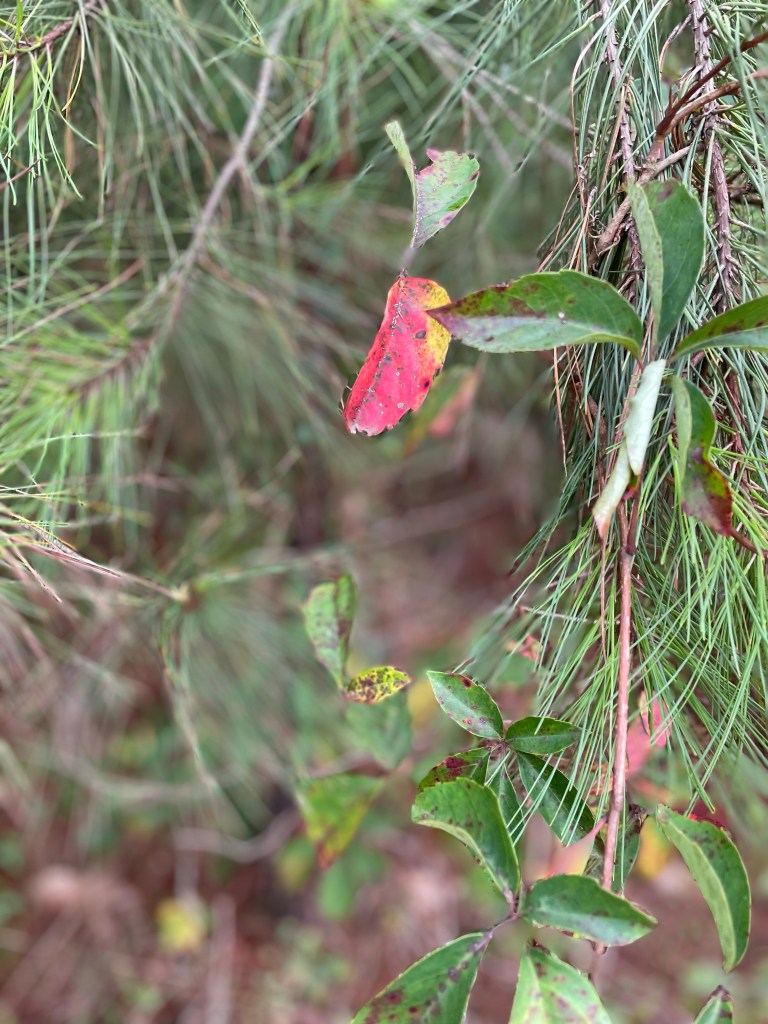
I felt Fall wispy through the bordering trees on Monday morning.
August saying change is coming, change is coming, the kind that causes retrospect in the realization.
Small and sweet, the change.
God’s Hand The Strangest Bloom Early Color
The morning rain on Tuesday made the road a soft and sandy cushion under our feet.
We measured our bare feet and talked about the shape of them.
Walked towards the corner and remembered being brave and careful.
We stood still and saw the sunflower aurora against the blue sky border.
We climbed the little hill, twice the height of the two year old.
I’m thinking now of how careful she was, careful and brave.
I told her she was brave to climb the little hill to touch the flowers.
Told her I was brave too.
Later, I approached the room where I paint.
Brushes left soaking in murky water, a week’s worth of blue paint tinted water spilled as I chastised myself for being undisciplined, unsuccessful, “un” driven.
Cleaned up the mess and sat for a minute to add color to an acceptable but unfinished canvas.
Swirls, shapes, layers became a subtle oyster shell.
I left it, pleased in the satisfaction of enough.
A small thing.
Not a burden.
Rest for my soul.
Considered adding to the waiting in process angelic canvas.
Finish it. Share it, wait for the likes and notice.
No, not today.
Tonight, I chose small.
Gentle with myself.
Brave in small ways.
“Come to me, all who labor and are heavy laden, and I will give you rest. Take my yoke upon you, and learn from me, for I am gentle and lowly in heart, and you will find rest for your souls. For my yoke is easy, and my burden is light.” Matthew 11:28-30 ESV
What are you carrying?
“Even angels must find their wings too heavy sometimes.” Helen Van Slyke
“Praise ‘n Worship” (prints available, comment to purchase)
I’ve missed the part about the shared yoke with Jesus being easy to carry, being light.
“In times like these you need a Savior In times like these you need an anchor Be very sure, be very sure…” In Times Like These
Saul was blind for three days after being confronted by Jesus over why he chose to be such a criminal, intent on being so vicious.
He was found and he saw life differently.
One lamb wanders away, the others stay in the pasture waiting as the shepherd, the master of their wellness and safety leaves them to find the wayward one. The parable is for us, the ones who were lost and still get lost sometimes.
We need our good shepherd. We’re prone to forget.
“Think of it this way: If a man owns a hundred sheep and one lamb wanders away and is lost, won’t he leave the ninety-nine grazing the hillside and thoroughly search for the one lost lamb? Now you should understand that it is never the desire of your heavenly Father that a single one of these little ones should be lost.” Matthew 18:12, 14 TPT
I saw a man walking on Wednesday.
His dark hair combed back from his face, his jaw clean shaven. The sun came up over his shoulder, I hoped it was the one I’d been praying for, the man I’d seen the days before.
This man curled up under the overpass, then later on my route, walking cloaked in black jacket and too big pants, bent down towards the sidewalk along the highway, once I saw him leave the Waffle House, I prayed he’d been well fed.
Seeing him early in the day made me hopeful. I prayed God had made for him a new path.
I’ve been sketching lots of practice sketches for a commission, a bird cradled in a hand was the request. Instead, I keep sketching hands cupping a bird in a nest.
Think of this.
We know God cares for us by looking at the birds as evidence of that love.
Look at the nest built by a mama bird and you’ll see it’s even more elaborate than we can fathom. A bird nest, intricately woven together, little stems and pieces of whatever that the bird creates using a sort of circle pattern as if the cupped hand of God is keeping it safe until it can fly on its own.
I’m humbled and awed by this.
If God, the maker of heaven and earth has equipped a bird to do this, how could I ever question His love and intentional preparing of me, to do things for those around me and for Him?
“Consider the birds—do you think they worry about their existence? They don’t plant or reap or store up food, yet your heavenly Father provides them each with food. Aren’t you much more valuable to your Father than they? So, which one of you by worrying could add anything to your life?” Matthew 6:26-27 TPT
Be very sure. He cares for you.
Like a mama bird with babies, like a kind and gentle shepherd who’d never abandon his lost lamb.
Like a Father who is wise, a friend who is kind. Like a stranger who stops what they’re doing to offer aid.
Be very sure, God cares for you and for lost, lonely or weary people you’ll never know.
If she could go without a soul knowing, she knew where she’d run off to. Down Highway 80 through Savannah, through the mossy oaked canopy, and over the bridge crossing grassy low tidewaters. She would find that old place, the place she felt known. She would take what she needed, chill some water in the Frigidaire, and have crackers and peanut butter wrapped in her Kleenex, food for the road. All would be well. She’d venture down to the lonely October shore and sit on the sand; she would be on the beach. She would wash her feet in the frothy tide. She’d sleep soundly with the breeze, the little clapboard house by the shore, the place she longed for, left her art there, the place where her dreams began. The place where someone else now lives, strangely she decided they would just welcome her in. She would wake with the autumn crispness and move towards the kitchen, avoiding the tiny room, space where she used to stay. She ached to be there again. She longed to have her fingers, arms. elbows covered in paint, to forgo the brush, blending colors in. She would consider painting again, maybe later. She might allow herself to be taken away, to be lost in the translation of her concerns to thickly layered colors. “Iris”, she might pencil in in the corner, always signing that way. Maybe this evening she thought when the light comes through the sheers just before the day gives way to night. She might settle in then, lose all track of time and heartache. Wouldn’t that be something? Everyone would talk! Iris has up and left Earl, she always had an independent streak! She smiled, thinking of all the women at the factory, the gossip, the whispers.
Instead, she drove back home, the little white house, tin-roofed and porch screened in. It was Friday, no telling what was waiting. Her husband, a carpenter, fisherman, a rounder, and rascal would be waiting. About thirty minutes away, longer if she could drive like she wanted, slow and smooth in her silvery-blue Impala, if she could she just keep right on going she would. She’d like to take longer before easing up the hill and cruising, her foot off the gas and over the bridge that marked the creek. She flipped on the blinker, she had to get on home. The highway changed to sandy dirt; the first curve was the sharpest as she passed his cousin’s place. She cracked the window and let the other one down all the way, Remer’s wife would be peering through the parlor window, same time every day, making sure she had come back home. The one perched on the tractor slowing to see her, his baby brother was watching too, knowing he’d made it home from wandering now and waiting for his wife to get her “sorry self” back home. She smiled, satisfied in her last moments of alone. Creating pretty things, little flowery dresses, gingham checked and ruffled, her art, the products made by her hands. Only three days into October and she had made production.
Her fingers were bent and achy, their tips flattened smooth. One hundred little Christmas dresses from four different patterns and each of them the same except their velvety hue; cobalt blue, rich red, emerald green, or ivory. Some with broad white collars and some with wide sashes for tying bows cinching perfectly around tiny waists. For ten hours a day and a Saturday, she had been taken away to a place that was hers, a place she could be proud of, a place close enough to feel free, free like the painting she used to do.
She turned onto the path that led her back home. He might be sitting out back on the steps or she might hurry in past the sight of his broad back in bib overalls, bent over the old table cleaning his fish. She wouldn’t ask him what he had done today, only go about her business, get herself out of her slacks and cotton blouse and into her housedress and slippers, he’d been waiting for his supper. She knew his expectations. She understood her role.
As she headed towards the kitchen she remembered, there was no rice for supper! Oh, Lord have mercy! She had forgotten to cook that morning. Her husband had gone without, no rice for dinner and none waiting for his supper. She turned back towards the hallway and she saw it there, the old rice pot that was always sittin’ on the stove, it had been thrown up against the sitting room wall. Laying there with the sun coming through the picture window, shining like a flash of warning or a lost coin, either way, the rice was not ready, supper would not be on time. There was nothing for her to do now. She would have to be prepared. Sooner or later he would barrel through the door, overalls half on and half off and the stub of sucked-on cigar loping sideways from his lip. She would know right away; she would detect the smell or not of Pabst Blue Ribbon. She could only hope there wasn’t a deeper smell, the thick scent of warm bourbon or the belligerent tone of clear liquid, meaning there might be anger and she was surely too tired to take him on. Oh, how she wished her girls were there. But, long gone they were and with husbands of their own, one feisty and determined and the other followed not too far behind. She hoped the other brother who lived beyond the cornfield might pass through. They would talk of the weather or the crops or the President, move to compare their sorry-ass women, and how their lives should have turned out differently. But it was looking like a lone night, just the two of them and she had no idea when he might decide to come inside.
She turned to listen, as still as she could be, and decided he must be occupied with cleaning fish or digging bait or maybe brooding in a close to drunken state. She had time maybe, time to get the rice ready, time to pretend she had not forgotten before leaving for work, leaving her husband here. She reached for the Tupperware and opened its lid to scoop out the white grain into the soon-to-be boiling pot of water.
She startled when the screen door creaked. She stood still to measure his mood by the weight of his feet on the porch. She listened as he grew closer, seemed somehow more spring in his step. She’d grown accustomed to the heaviness of his stride, his feet like cinder blocks, the way they seemed so thick, pushing himself along in despair. Her heart was pounding. She listened. He stepped into the kitchen and ambled towards the sink and there he lingered. She felt his breathing on the back of her neck, she noticed the scent of his labor and decided today, maybe he had been working. She opened her mouth not sure what to say or which way she should begin. Before she could speak, he came even closer and then turned, his hand on her shoulder, the other one circling around her waist. He cradled her for a moment and then turned and walked away, left her standing there. Butterflies rose up in her belly and fluttered in dance at her throat.
She was frozen in front of the stove; the sensation of his touch had overwhelmed her. She looked at the pot waiting for the boiling water and listened as he ran the bathtub water, longer than usual. What in the world, was he not worried anymore about the well running dry? She realized she had more time. She opened the icebox and pulled out a chicken and the beans. If she hurried, the Crisco would be ready about the time the rice simmered down and the leftover lima beans, she would season them with a fresh “strick o’ lean”. She listened as she worked, his odd behavior allowed her more time. She thought of slipping past the tiny bathroom to the bedroom mirror to check her hair and her face, but she decided not to chance it, he would hear. She never knew really; she was careful not to wake her sleeping giant of a man. Something might set him off and he’d holler loud from the other side of the wall, probably then he’d let her have it, did she just expect him to go hungry again?
Supper was nearly done ‘bout the time the sky changed from blue to dark and thundering grey. The wind was whipping the loose tin on the back shed and pine limbs were threatening to come through the windows, thick and green they pushed against the windows and then moved away just long enough for her to see where the storm was headed, how long it was staying, the hard rain, the threatening thunder the flash of angry lightning. He’d be back in the kitchen any minute and he’d tell her he knew it all day, he knew a cloud was making up, he saw it coming. She waited and then continued. She floured the chicken and dropped it carefully in while the beans were warming and the rice was filling up the pot, the water making it thick and the way he liked it, thick and fluffed, not mushed together. The aroma filled the room, a later than normal supper. She was scrambling to move the cast iron from the heat for the gravy when he came around the corner. He walked towards the table, pulled his chair out, and told her, “You ain’t got to make no gravy.”
He surprised her when he said softly, “I was thinkin’ all day, I sure hope we get a good hard rain.” then asked her how her dressmaking went today. She answered that it was good, he nodded and then just looked away. He told her he had gone to town and that he talked with a man about helping a man with some carpentry. Rumor had it that there were new houses coming in just out past the grocery store, that a Yankee from Carolina had bought up all the land and that somebody told them if you need a good carpenter, well, Earl is your man. He told her that he was sure the rich man had been warned, “You just have to catch him sober or not fishin’”. She listened as he continued, remembering her daddy and how she had been warned about his reputation, his family was good people, but the son was rowdy. He was a charmer she remembered, his swagger swept her away, upturned lip with an “I got you girl” smile, he reeled her in. They finished their supper and she rose to clean the dishes as he leaned back in his chair and told her, “You better get on to bed, they’ll be expecting you early again tomorrow.” She paused, “Good night.” she said, and then she barely heard him mumble in reply. She did not remind him she would not be working tomorrow.
The storm had passed, and the windows only open a tiny bit, she listened to the birds in an exchange, singing sweetly one to another, the crickets and the frogs down by the pond would soon join in. Tomorrow she decided, she would go to town, it was Saturday, she might see if he wanted to ride along. She drifted off to sleep, slept like a baby. She woke to the sound of coffee percolating and a strange sense of mystery, of newness, and of intrigue. Coffee and cream and the corn flakes and evaporated milk were placed on the table. No words were spoken between them, unfamiliar and awkward, this new way of them. Not his way to think of fixin’ breakfast.
“I think I’m going to town today.” she offered. He grunted. He had grown accustomed to her independence, gave up on changing or caging her in. She did what her preacher man daddy raised her to do, she was dependable and gave in to most everything, knew when to leave him alone, stay out of his way. He let her veer off on occasion, it gave him his space. He didn’t know what she was up to, what was happening between them? He said okay when she out of nowhere asked, “You want to ride to town with me?” then he instantly regretted his answer. What in the world? That would mean changing his overalls, changing his plans, putting on clean boots, sitting closer to her than he had in years, all enclosed in her car and barely an arm’s length away from her body. He would be the passenger in her beloved Chevrolet. “You ready?’ she asked. He looked out the window and walked away, never gave an answer. She waited. She wondered. She regretted asking. Then she heard the rusty creak of the old Nova’s door, the pumping of his foot on the gas to give it the boost it required, and the beat-up old chassis backed up and bolted through the field and down the roads, swerving she knew it, barely keeping it between the ditches.
She sat as morning changed around her. The corn flakes flat and floating, the coffee cold and the house was again silent. She thought of her life, how it could have been. She remembered the cousin who left Georgia and moved to California, became a designer, famous in a way she supposed. She rose to wipe the counters, poured the coffee out the back door, took the corn flakes down by the edge of the woods, scraped her bowl, left it all there. She promptly returned to the bedroom, made her bed, knelt down, and prayed. She rose to gather the white blouse starched and waiting and navy slacks, flat shoes. She found her blue cameo pin. She washed her face, took the bobby pins from her hair, added red lipstick then blotted it to fade to barely there. Dressed and ready, she grabbed her pocketbook and her keys, her little list, her memorandum and she slammed the door behind her. It was only 8:00 in the morning and she knew he would be down by the river; she had the whole day.
Iris slid into the seat of her car, glancing down through the field, corn on either side, the road that led to his family. She popped it in reverse and glided back before turning the other way. She had no idea where she was going, she just knew she was going away. She made it to town too early for lunch, barbeque had been the plan for the day. She decided on the café, found a booth, and sat to listen, watch, pay attention to others. A pattern of hers it has always been, comparison of her life to almost everyone everywhere, she was an observer. The waitress served her coffee, toast, and jelly as she lingered. She thought about the possibility, of her husband sitting across the table having a pleasant conversation. She remembered the night before, the glimmer of different, a slight change in him, for them. No idea what to do next, she paid her bill and left, walked out into a perfectly cloudless day, and then started her car to go on her way. Windows down and a scarf tied at her neck, she drove towards the beach and then turned back the other way. Unsure whether to be angry at herself for not going or satisfied that she chose the better thing, she remembered her memorandum and made her way to the McConnell’s Five and Dime.
Barely noon, she still had a lot of day. She opened the door, welcomed by a sharp clanging bell. “Well, hello Iris”, she heard someone say and she turned to see an old classmate; the one who left the country and made her way to the big city. She smiled, dreading the questions of how and what in the world have you been doing. She anticipated grand stories of her successful husband, her children, her grandchildren, her brick home, a garden with brilliant flowers, a display of pride, and better than. Small talk of family and weather led to nosy interrogations she endured. Inquiries of her husband, of her daughters, of their home, and whether she had ever decided to pick back up on painting.
She answered all of them, made excuses to hurry up her shopping, nice to see you again, say hello to your mama. She watched her walk away, listened as her heels clickety clacked down the aisle, and overheard her words to the cashier, condescension over an apparent mistake in her change. Iris stood for a moment and then decided on a change. She slowly pushed her buggy down one aisle and then the next, forgot about the Pine-Sol and the detergent, continued on her search until she found it, the small section with the thick ivory papers, the colors, and the brushes. A box of crayons, she opened them and smiled over all the colors before closing tightly the lid and setting them down in her buggy. A large brush for backgrounds and a small for details, two or three more for blending and then tubes, oh so very many happy tubes of paint! She inventoried her list, best she could remember she had all she would need. She paid for her items and danced through the exit doors; going back home, not running away.
As fast as she could, she made her way back home, mapped out the afternoon, time allotted her for solitude. She thought of what she might do for a bite to eat, enough to get by until supper, she was excited, so very excited. Barely turning to notice the sister-in-law, the cousins, the brother in the field, she pulled in and unloaded quickly, laid her beautiful things out on the porch. She grabbed the peanut butter and the crackers, ice water, and a banana. Remembered the rice then and considered not cooking but decided it’ll only take a minute, might as well do this for him. It was expected and it required so very little of her, put the water in the pot, the rice does the boiling, cover it with a lid and just leave it there. It will be there for him, whenever and however he comes back in. It was such a little gesture, somehow, she saw it now, as a gift.
All of that accomplished, she found a big old sheet, spread it out on the floor, and made a place for her paper. She found an old piece of wood, leaned it up against the screen, and with a rusty nail positioned her idea of an easel for her paper canvas. A jar filled with water and brushes soaking, she found an old broken dish and made herself a palette. Vibrant blue was her background and greens, red and purple followed. With no idea of how to begin, what to paint, she simply layered colors. She stood back and admired the symmetry, the way one color spilled over to another bordered by heavy tint turning to faint shade and shadow. She found the box and crayons and added flowing lines in length and layers, she decided they reminded her of gowns. So, she quickly added shoulders, gauzy sleeves over arms, and shapes of faces titled one way or another. She added ruddy cheeks and pale hollowed ones made barely noticeable bridges of noses and only just hints of blue, brown, or green where the women in flowing gowns eyes would be. She sighed, an audible “Ah!” escaped from her lips, and then she felt it, the smile, the filling up because of it of her cheeks. She gazed at the colors, the freedom of them, thick paper flamboyant and joyous colors, all types of stories. She rested then realized the time had escaped her. The dusk of the day was approaching. She gathered her jars and her brushes, stuffed crayons back in the box, and careful not to ruin the extras, gingerly picked up her papers, picked up the unpeeled banana, and nibbled a stale cracker. She scrubbed the brushes and laid them on a dishcloth to dry, turned on the pilot light, and then the burner, the rice, oh, Lord, the rice had to be ready! Hurriedly she finished, put everything away, and decided chicken from last night would be enough, would be okay. She walked out onto the back porch to see the coral sun setting and she breathed deeply, sat down in the place where he’d be pulling in, and rested her bare feet in the soft cool dirt-like sand. Her husband would be home eventually; but she wasn’t worried, not afraid.
She made a choice today when she could have chosen another way. She could have chosen rebellion, a trip to Tybee, and come what may. She surely did consider it. She could have chosen pity pouting in the discount aisle and she could have chosen to be a fighter for her freedom. Instead, she chose to gently open her own door. Iris was daydreaming when she heard the familiar sound of him coming around the corner. She thought to get herself together, to hurry back in, stand waiting in the kitchen in a wifely way. She stayed still, she waited. He pulled into the driveway and turned to look her way, puzzled for sure, he smiled, and then he shook his head. He walked over to see her and asked, “How was your day?” Before she could answer he told her he was sorry, that he knew she wanted him to go to town today. She smiled and asked about his day, about where he had been. He answered with a grin, told her he drove towards the river then came back to check the pond dam, decided to see the plot of land where the fancy houses would be, and ended up back at his brother’s, just sitting around mostly. She told him supper was about ready and that she had just wanted some air. She reached for her shoes, brushed the sand from her feet, and headed back in. He walked beside her, straight with no sign of stagger and he reached for her hand. She did not know what to make of it, she allowed it, she accepted him then. As they stepped towards the porch, she saw the makeshift easel, she remembered the painting. He opened the door and held it for her, and he turned, and he saw it and said nary a word. Supper was different because he kept on being different and when it was done, he pushed his plate to the table’s center and got up out of his chair.
She watched as he stepped towards the porch; listened as he stepped back towards her. He carried the piece of wood made into an easel and tenderly placed it with its still moist colors on the sill of the window that looked out towards the field. Then he shifted it left a little before saying, “That’s somethin’ else! A real pretty paintin’ Iris, why don’t you make another one for here.” She stood up from the table and met him in the middle and she knew in her heart, everything would change from here, her independent streak not broken against her will, but gently set free and blended, the color returning to her story.
“Look at the Birds” is a book inspired by Matthew 6:26, a reminder for children and the people who love them.
You can purchase a copy by contacting me, in Aiken at 3 Monkeys, in Augusta at Sacred Heart Cultural Center or online at Amazon, Target, Walmart or Barnes and Noble.
I’d love to share this book as a part of your children’s ministry or VBS or summer reading programs by offering bulk purchases of the paperback.
Contact me at ltartandword@gmail.com for more info.
“And we all, with unveiled face, beholding the glory of the Lord, are being transformed into the same image from one degree of glory to another. For this comes from the Lord who is the Spirit.” 2 Corinthians 3:18 ESV
Before the eggplant, there are tiny purple flowers and day by day you can watch to see the transformation. Sometimes I say to myself simply. “Something good is coming.” It’s not that I’m just that confident, it’s that I can look back on my life and see this pattern. I worry about not seeing and knowing the evidence of good and then I decide to let whatever it is alone and unexpectedness of good surprises me. (again)
I made a list of ten questions this morning. I’m made this way, need to know if, when, how, why. I got to number 10, got choked up over the honesty of “How can I know God really knows me?” Sat with my own vulnerability for a minute and then looked over my list. I let God give me the answers. They came naturally.
Moments like this are personal. Like a hydrangea turning from white to lavender to purple or an eggplant blossom falling from the stem once the vegetable is full grown.
Transformation is a quiet process. It’s inner work of our God who knows our inner workings.
Make your list of questions, things you’ve been waiting and wondering over along with your raw questions of God.
Sit with them. The veil between you and God will be gently pulled back and you’ll see His perspective on your longings and you’ll have peace even if you don’t yet have answers.
Maybe, like me, you’ll realize you already knew the answer, you just needed to be reminded. I can be pitiful. I can be stubborn and envious. That’s my nature, God gently reminds me I am seen, fully known and loved regardless.
Faithfulness to each moment keeps me whole and humble.
we run away from our discomfort... but it doesn't leave us. to heal we need to turn around and face it, experience it and once we truly do we are out of it. We heal and we grow.
2 Timothy 1:7-8 For the Spirit God gave us does not make us timid, but gives us power, love and self-discipline. This blog is about my Christian walk. Join me for the adventure.







 Lisa Anne Tindal